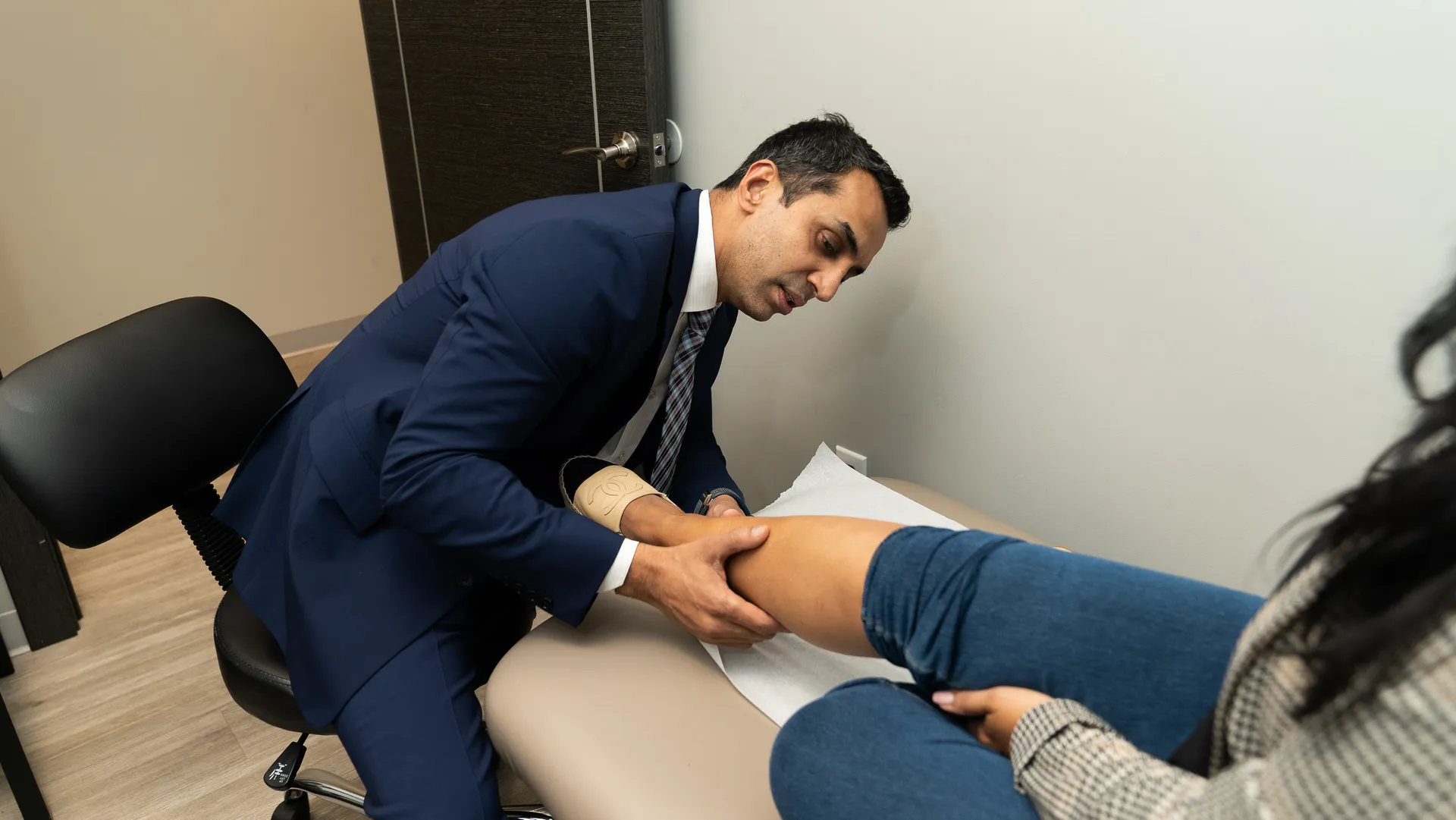
Why Your Legs Swell More in Humid Weather: Preparing for May Humidity in Ardsley
Published 2026-04-27
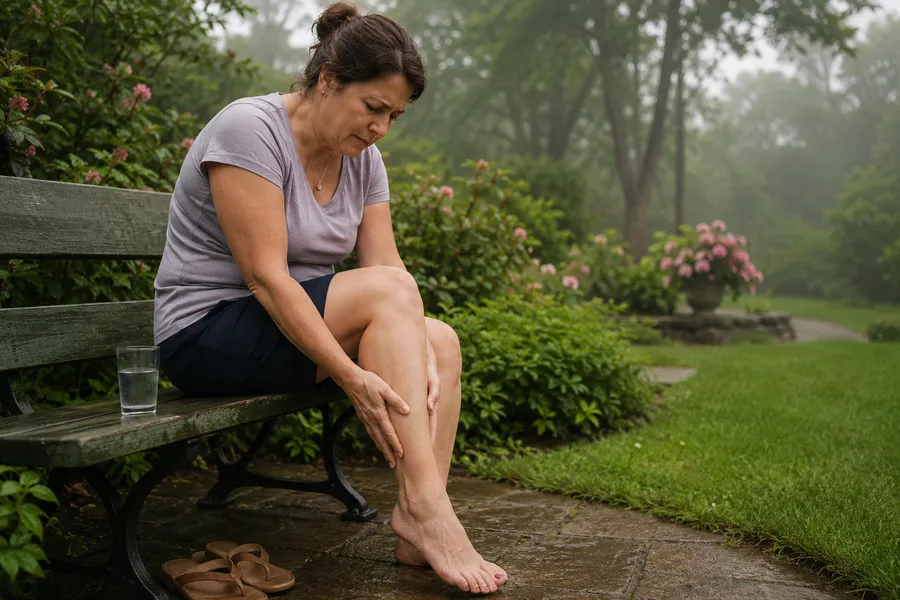
By 5 PM your shoes don't fit the same way they did at 8 AM. The strap that sat flat across your ankle now leaves a pink dent that takes thirty minutes to fade. If you live in Ardsley, NY, Hudson Valley May humidity makes this far more familiar than you'd like. Vein Center Doctor explains why heat and humidity exaggerate leg swelling — and when that swelling has crossed from a seasonal nuisance into a sign of chronic venous insufficiency that deserves a free evaluation.
The Physiology — Why Heat and Humidity Make Legs Swell
The body's primary response to heat is peripheral vasodilation: the small blood vessels near the skin widen so heat can radiate out. Wider vessels hold more blood. More blood in the lower legs, plus gravity, plus a humid day that limits the skin's ability to evaporate sweat efficiently, equals more fluid sitting in the soft tissue around the ankles by late afternoon. That's the everyday version of warm-weather swelling, and it's normal — to a point. When the swelling persists overnight, accumulates day after day, or pairs with heaviness, aching, or visible varicose veins, the underlying mechanism is usually more than weather. Dr. Rahul Sood and the team at Vein Center Doctor in Ardsley evaluate exactly that crossover.
What Is Chronic Venous Insufficiency?
Chronic venous insufficiency, or CVI, is a long-term condition in which the one-way valves inside the leg veins fail to close properly, allowing blood to flow backward and pool in the lower legs. This venous reflux raises pressure in the veins of the calf and ankle, producing symptoms such as swelling, heaviness, aching, varicose veins, and skin changes. CVI is progressive without treatment but responds well to minimally invasive procedures.
Normal Seasonal Swelling vs. CVI — How to Tell the Difference
The line between "everyone's legs swell in May" and "this is venous disease" is more drawable than people assume.
Normal seasonal swelling typically:
- Builds during a hot, humid day
- Resolves overnight with normal elevation in bed
- Affects both legs roughly equally
- Doesn't come with heaviness, aching, or visible vein changes
- Doesn't leave persistent skin discoloration
Likely CVI swelling typically:
- Persists into the next morning
- Affects one leg more than the other
- Comes with heaviness, fatigue, or aching that worsens with standing
- Appears alongside visible varicose veins or spider vein clusters
- Eventually produces skin darkening around the ankle
The consultation at Vein Center Doctor's Ardsley office uses duplex ultrasound to confirm or rule out reflux in the superficial venous system, so the answer doesn't depend on guesswork.
Self-Care That Genuinely Works
There's a lot of advice out there. The portion of it actually supported by venous physiology:
- Elevation — raising the legs above heart level for 15 to 20 minutes a few times a day uses gravity to drain pooled fluid back toward the trunk.
- Movement, especially calf-muscle pumping — the calf muscles are the second heart for venous return; walking, ankle circles, and standing breaks during desk work all support flow.
- Hydration — counterintuitive, but well-hydrated tissue retains less fluid than dehydrated tissue.
- Sodium awareness — high-sodium meals drive water retention, which lands in already-overloaded legs.
- Properly fitted compression stockings — medical-grade compression, sized by a clinician, supports venous return mechanically and is one of the few interventions with consistent symptomatic benefit.
Skip the wraps and over-the-counter "circulation boosters" — they don't address the underlying valve problem.
When Swelling Has Crossed the Line
Some signs justify a vein consultation at Vein Center Doctor rather than another month of waiting and elevating:
- Swelling that doesn't resolve overnight
- Swelling concentrated on one leg
- New or worsening varicose veins
- Brownish skin discoloration around the ankle
- Skin that feels tight, hardened, or itchy at the ankle
- Heaviness that makes the second half of the day feel longer than the first
- A previous diagnosis of CVI that's been "managed" with compression alone for years
Read more: How Do You Treat Edema When You Have Chronic Venous Insufficiency?
Treatments That Address the Underlying Cause
Vein Center Doctor's minimally invasive procedures target the source — the refluxing vein — rather than only the visible symptoms.
Radiofrequency Ablation (RFA)
A thin catheter is inserted into the diseased vein under ultrasound guidance, and radiofrequency energy is delivered along the vein wall, sealing the vessel shut. The body absorbs the closed vessel over weeks, and blood reroutes through healthy deep veins. Swelling and heaviness improve as venous pressure drops.
VenaSeal
VenaSeal closes the refluxing vein with a medical-grade adhesive — no heat, no tumescent anesthesia, and typically no required compression stocking afterward. For patients who want the most streamlined recovery profile, it's often the first choice.
Sclerotherapy
After the underlying refluxing vein is addressed, sclerotherapy clears smaller residual spider and reticular veins by injecting a sclerosing solution that collapses and fades the targeted vessel.
Medical-Grade Compression
Compression isn't just a self-care strategy. Properly prescribed compression supports the entire treatment plan. The Vein Center Doctor clinical team fits patients with the right class and length rather than the random pair from a drugstore.
Why Early Action Pays Off
CVI is progressive. The same valves that fail at age 38 are not going to start working again on their own at age 48. What does change is how much surrounding damage accumulates — skin pigmentation, eczema-like changes, hardened tissue, and in advanced cases venous leg ulcers. Treating reflux earlier — while the only symptom is the late-afternoon shoe-fit problem — interrupts that arc. Patients who arrive at Vein Center Doctor in their thirties and forties have a wider, gentler menu of options than those who arrive in their seventies with skin already changed.
Frequently Asked Questions
Is some leg swelling in humid weather just normal?
Yes, mild swelling that resolves overnight is common and not a sign of disease on its own. The shift to evaluate is persistence — overnight or day-over-day — or the addition of heaviness, aching, or visible vein changes.
I've been told I just have varicose veins, not CVI. Are they different?
Varicose veins are usually a visible manifestation of underlying CVI rather than a separate condition. The visible bulging vessel is fed by deeper refluxing veins. Treating the source — typically with RFA or VenaSeal — is what produces lasting improvement.
Do compression stockings actually help with swelling?
When properly fitted and worn during the day, medical-grade compression demonstrably reduces leg swelling and symptoms. Drugstore "support socks" rarely deliver the same level of pressure. The Vein Center Doctor team fits patients individually.
Will my swelling go away after RFA or VenaSeal?
Most patients see meaningful improvement in swelling, heaviness, and aching within weeks of closure. The exact trajectory depends on how long CVI has been present and what additional veins, if any, contribute to the picture.
I'm in my thirties — is it too early to consider treatment?
No. CVI in your thirties is the easiest version to treat, because the surrounding skin and tissue haven't yet been remodeled by years of venous hypertension. Earlier evaluation at Vein Center Doctor in Ardsley generally means more options.