Hiking the Hudson Valley This Summer? Prepare Your Veins First with Treatment in Ardsley
Published 2026-05-11
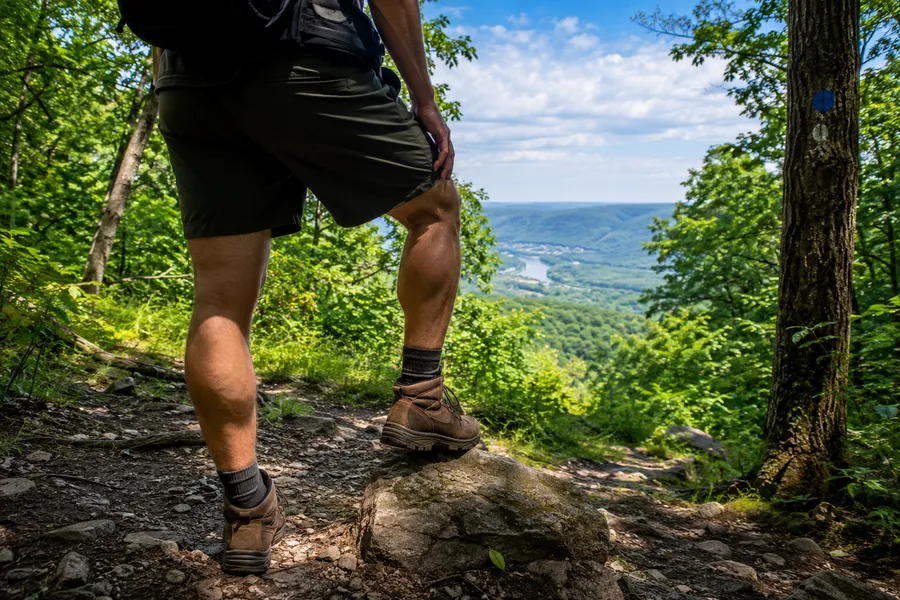
The Old Croton Aqueduct trail runs 26 miles from Yonkers to Cortlandt, passing within minutes of every Ardsley driveway. Rockefeller State Park Preserve sits 20 minutes north. Bear Mountain, with its 1,300-foot summit climb, is under an hour by car. For Westchester residents who actually use the trail network, the calendar between Memorial Day and the first cold weekend in October is a tightly packed hiking season.
But somewhere around mile two — usually on the first real incline — something has started happening that didn't happen five years ago. Your calves feel heavy. The legs that used to carry you up to Anthony's Nose without complaint now demand a rest at the first switchback. You blame age, fitness, hydration. The actual culprit is more specific.
Vascular surgeons call it exercise-induced venous insufficiency, and it's the reason your hiking range has been shrinking even though your cardio numbers haven't.
What Is Venous Insufficiency, and Why Does It Limit Hiking?
Venous insufficiency is a condition in which the one-way valves inside the leg veins fail to close properly, allowing blood to flow backward — a process called venous reflux — instead of returning upward to the heart. The pooled blood increases venous pressure in the lower legs, distending the vein walls, leaking fluid into surrounding tissue, and impairing oxygen delivery to working calf muscles. The result is leg heaviness, fatigue, and reduced exercise tolerance, particularly on inclines.
The frustrating part isn't the diagnosis. It's that most patients with reflux think they're just getting older or out of shape. The legs feel heavy because the venous system is failing, not because the heart is.
The Hiker's Specific Problem: Why Inclines Make It Worse
Flat walking — the Old Croton Aqueduct's signature terrain — is generous to incompetent veins. The calf muscle pump, working efficiently in a horizontal stride, compensates for moderate reflux. Most hikers with early venous insufficiency don't notice symptoms on level trails.
Inclines change the equation. Climbing engages the calf muscles asymmetrically — the concentric contraction on push-off is followed by an eccentric loading phase that doesn't pump blood as effectively. Sustained climbing on the Briarcliff-Peekskill section, the steep stretch through Teatown Lake Reservation, or the Major Welch Trail up Bear Mountain places sustained venous pressure on a system already struggling to return blood against gravity.
The clinical signature is consistent across patients:
- Legs feel fine for the first 20-30 minutes of flat walking.
- The first significant incline produces calf heaviness disproportionate to effort.
- Rest stops feel longer and less restorative than they used to.
- The descent — supposedly the easy part — produces aching and swelling within an hour of returning to the car.
- Compression stockings worn during the hike noticeably help, which is itself diagnostic.
That last point matters. If knee-high compression makes your hiking range expand, you almost certainly have venous reflux that warrants evaluation.
Read more: The Link Between Venous Insufficiency and Restless Legs Syndrome
How Duplex Ultrasound Maps Your Reflux
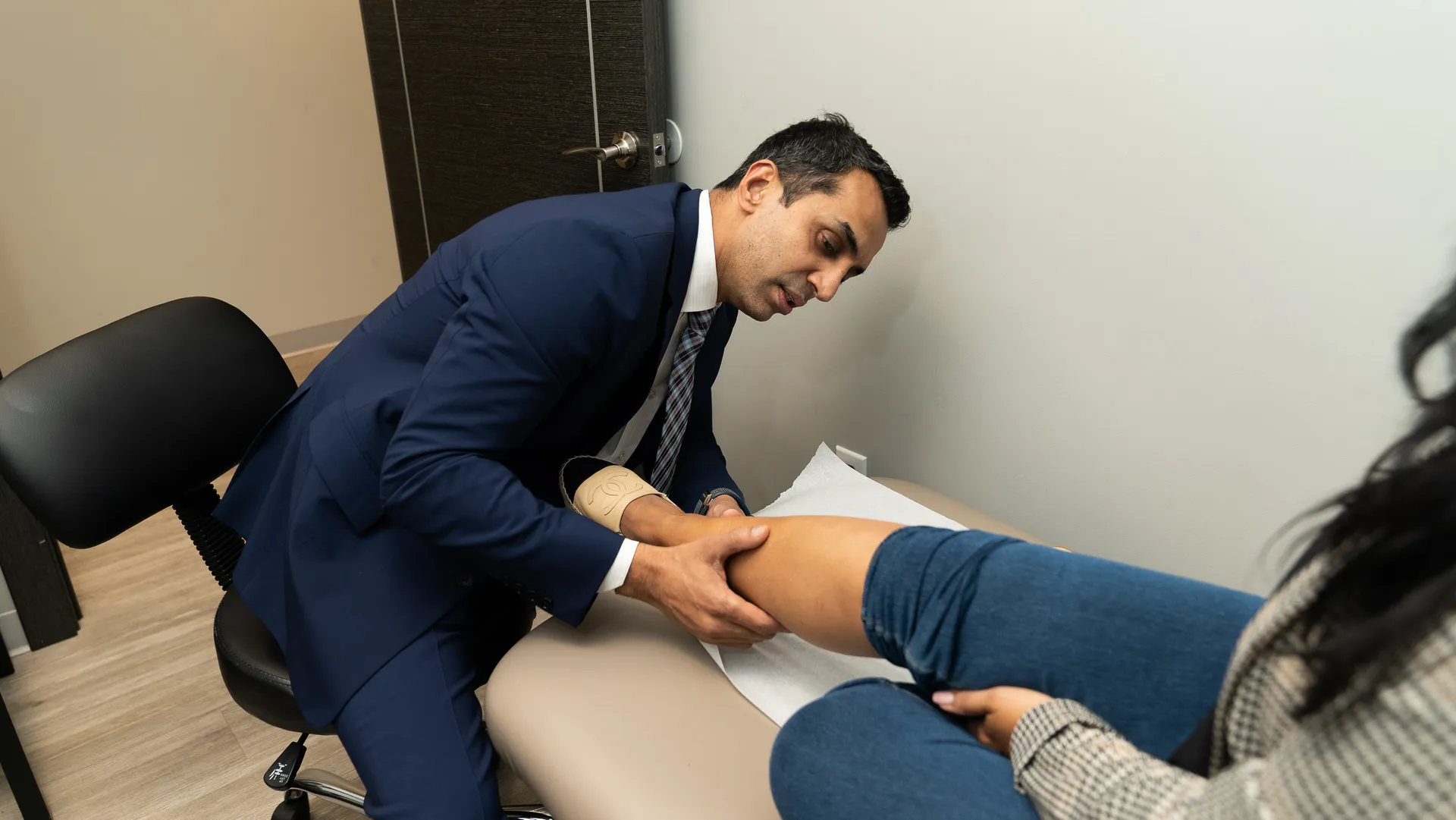
Diagnostic vein imaging at our Ardsley office takes about 30 minutes. The vascular surgeon performs duplex ultrasound — a combination of B-mode imaging and Doppler flow analysis — to visualize the great saphenous vein, small saphenous vein, and the perforating veins that connect superficial to deep systems.
The ultrasound measures reflux duration in seconds. Healthy veins reverse flow for less than 0.5 seconds when compressed and released. Refluxing veins reverse for 1 second, 2 seconds, or longer. The longer the reflux, the more severe the insufficiency.
The vascular surgeon then maps which specific veins are responsible. In some patients, only the great saphenous vein is incompetent. In others, the small saphenous vein in the back of the calf is the dominant source. In a meaningful subset, accessory or perforator veins contribute most of the dysfunction. Treatment depends entirely on which veins are doing it.
Radiofrequency Ablation: The Hiker's Procedure
Radiofrequency ablation (RFA) is the vascular surgeon's preferred minimally invasive treatment for hikers, runners, and other active adults with saphenous reflux. The procedure addresses the underlying anatomic problem rather than masking the symptom.
How RFA Works
A thin catheter is inserted into the refluxing saphenous vein through a small access point, typically near the knee. Under ultrasound guidance, the catheter is advanced to the saphenofemoral junction. Tumescent anesthesia — a dilute lidocaine solution — is injected along the vein course to protect surrounding tissue. The catheter then delivers controlled radiofrequency energy that heats the vein wall to approximately 120 degrees Celsius, causing the collagen in the vein wall to contract and the vein to close permanently. Blood reroutes through healthy deep veins, which were doing most of the work anyway.
The procedure takes 45 to 60 minutes. There are no incisions, no general anesthesia, and no overnight stay.
Recovery That Fits a Hiking Schedule
Most patients return to walking immediately. Light hiking — the Old Croton Aqueduct's flat sections — can resume within a few days. Sustained climbing, like the Bear Mountain ascent, is generally cleared at the two-week mark. Compression stockings are worn for one to two weeks post-procedure.
What patients consistently report at the six-week follow-up is the same observation, almost verbatim: the heaviness is gone. The legs feel like they used to. The next hike actually feels good.
When to Schedule Your Ardsley Vein Evaluation
Schedule a vascular consultation if you recognize any of the following:
- Hiking distance that has shortened over the past two to three seasons despite stable fitness.
- Calf heaviness on inclines that resolves with rest and recurs with effort.
- Visible varicose veins on the legs, particularly behind the knee or along the inner thigh.
- Leg swelling that's worse at the end of a hiking day.
- Aching that's noticeably better when wearing compression and worse without it.
A duplex ultrasound at Vein Center Doctor in Ardsley this month means RFA in early summer means full hiking range by August. The timing matters — treatment before peak season produces a better summer than treatment after symptoms peak in July.