Father's Day Gift Idea: Why a Vein Consultation Is the Best Present for Dad in Clifton
Published 2026-05-04
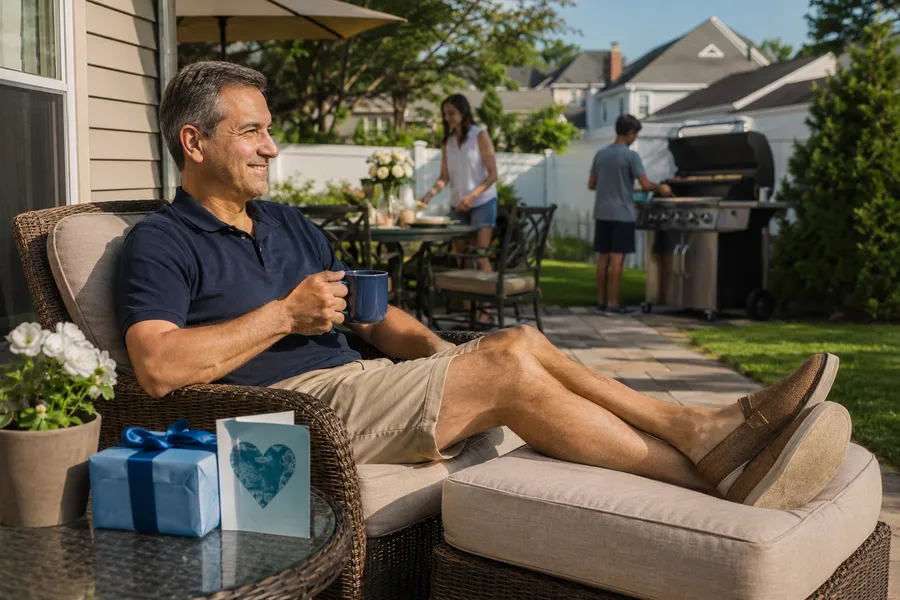
You've watched it for years. After mowing the lawn, after the long Saturday shift, after standing through a graduation ceremony or a niece's wedding, Dad sits down on the couch, props his feet on the ottoman, and rubs his calves with both hands. He doesn't say much about it. He hasn't worn shorts in maybe a decade. He shrugs it off when anyone notices the bulging veins on his lower legs, mutters something about getting older, and changes the subject.
That nightly routine has a clinical name. Vascular surgeons call it symptomatic chronic venous insufficiency, and roughly 25% of men over 50 have it. The far more relevant statistic is this: most of them never get it treated.
This Father's Day, the most meaningful gift in Clifton isn't another tie or a power tool he doesn't need. It's a conversation about his legs.
Why Men Avoid Vein Care (and Why That's Changing)
For decades, varicose vein treatment was culturally coded as a women's concern. The marketing photographed female legs. The waiting rooms decorated for a female demographic. Men, statistically, develop venous insufficiency at nearly the same rate as women — but they wait an average of seven to ten years longer than women to seek treatment.
That delay isn't free. Untreated venous reflux progresses. Bulging varicose veins become more painful. Chronic ankle swelling thickens into venous stasis dermatitis. Brown discoloration around the gaiter region — the medical name for the lower shin and ankle — becomes permanent. In advanced cases, the skin breaks down into a venous ulcer that takes months to heal.
You're not lazy for waiting. Many men were never told that aching legs after a long day are a medical problem, not just a sign of "getting older." Hormonal imbalance affects circulation differently in men, and male venous insufficiency is genuinely underrecognized by primary care.
The good news: modern vein treatment has changed completely. The painful vein stripping surgery your father's generation endured no longer exists in vascular practice. What exists now is something Dad can fit into a lunch break.
Read more: When to Worry About Varicose Veins
What "Modern" Means: VenaSeal and Radiofrequency Ablation
Two technologies dominate contemporary varicose vein treatment in men. Both are minimally invasive. Both are performed in office. Both let Dad return to normal activities within 24 hours.
VenaSeal Closure
VenaSeal seals the refluxing saphenous vein using a medical adhesive — a specially formulated cyanoacrylate compound — delivered through a thin catheter under ultrasound guidance. The adhesive bonds the vein walls together, redirecting blood flow into healthy adjacent veins. The body absorbs the closed vein over the following months.
Why men prefer VenaSeal: no compression stockings required after the procedure, no thermal energy applied to the tissue, no tumescent anesthesia injections along the vein course, and no activity restrictions. Dad can drive home, mow the lawn the next morning, and be at his Father's Day BBQ in the afternoon.
Radiofrequency Ablation (RFA)
Radiofrequency ablation uses controlled thermal energy delivered through a catheter to heat and close the refluxing saphenous vein from the inside. The catheter is positioned with ultrasound, tumescent anesthesia is injected around the vein to protect surrounding tissue, and the vein is treated in segments. The procedure takes 45 to 60 minutes.
RFA is appropriate for veins that don't meet anatomic criteria for VenaSeal, including very large saphenous veins or those with significant tortuosity. Recovery involves compression stockings for one to two weeks, but most men return to work the next day.
| Feature | VenaSeal | Radiofrequency Ablation |
|---|---|---|
| Mechanism | Medical adhesive closure | Thermal energy closure |
| Anesthesia | Single injection at access site | Tumescent anesthesia along vein |
| Post-procedure compression | Not required | 1-2 weeks |
| Return to work | Same day | Next day |
| Activity restrictions | None | Avoid heavy lifting for 1 week |
The vascular surgeon determines which procedure suits Dad's specific anatomy after duplex ultrasound mapping.
What the Father's Day Consultation Actually Looks Like
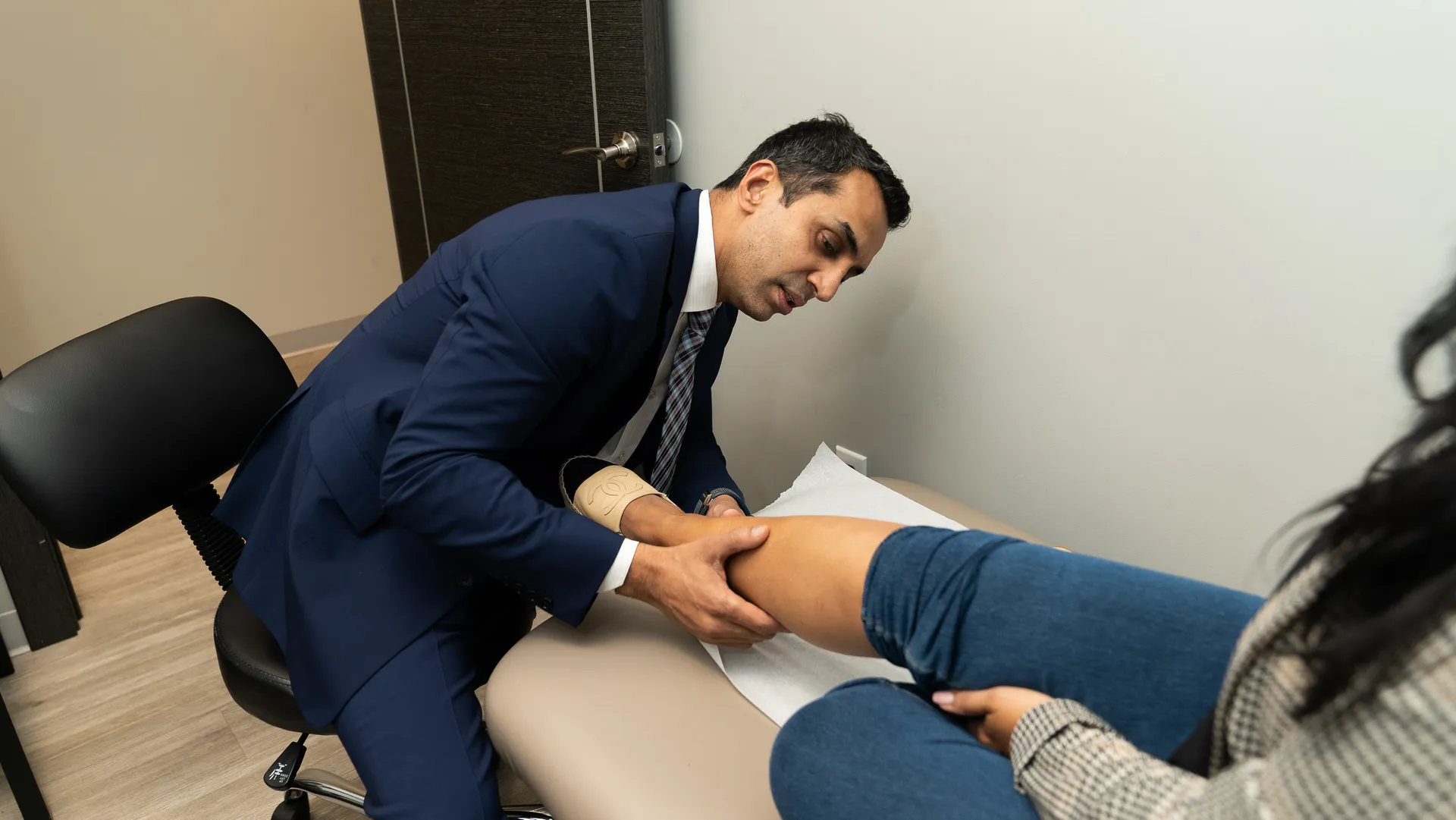
A vein consultation in our Clifton office takes about 45 minutes. Here's the sequence:
- Medical history review covering family vein history, leg symptoms, and previous treatments.
- Physical examination of standing leg anatomy, noting bulging veins, swelling, and skin changes.
- Duplex ultrasound mapping of the great and small saphenous systems, measuring reflux duration and identifying incompetent perforator veins.
- Diagnostic discussion of findings, with images shown directly to the patient.
- Treatment planning, including which procedure suits the anatomy, what insurance typically covers, and what scheduling looks like.
Dad walks out with a clear understanding of what's actually happening in his legs — usually for the first time in his life.
Insurance, Not Cosmetics
This is the part most men don't know. Symptomatic varicose vein treatment — when accompanied by documented symptoms like aching, swelling, heaviness, or skin changes — is generally covered by Medicare and most commercial insurance plans. It is not cosmetic surgery. The consultation, ultrasound, and procedures fall under medical benefits when reflux is documented.
The vascular surgeon's billing team verifies coverage before any procedure is scheduled. Dad is not going to be surprised by a bill.
How to Have the Conversation
You don't have to make it dramatic. A few approaches that work in Clifton households:
- Hand him the consultation card with the Father's Day card. "I noticed how much your legs bother you. This is the appointment."
- Frame it as a check-up, not a procedure. "It's just a consultation. Nothing else happens unless you decide."
- Offer to drive him. Men accept logistical help more easily than they accept medical concern.
- Mention insurance. "Your plan covers this. There's no reason to wait."
Even if Dad has been dismissive about his legs for years, a structured consultation often shifts the conversation. He's not being asked to commit to surgery. He's being asked to find out what's actually going on.