Warm Weather and Leg Ulcer Risk: What Clifton Residents with Diabetes Need to Know for May
Published 2026-04-20
You felt the sock rub a little raw last Tuesday and didn't think much of it. By Saturday there's a quarter-sized spot on the inside of your ankle that hasn't scabbed the way a small cut should. If you also live with diabetes, that progression is the one to take seriously rather than ignore. Vein Center Doctor in Clifton, NJ treats chronic venous insufficiency and venous leg ulcers — the underlying conditions that turn small skin breaks into long-running wounds when warm weather and impaired circulation overlap.
Why Diabetes and Warm Weather Are a Risky Combination for Leg Health
Two physiological problems converge in May and June for Clifton residents with diabetes. The first is peripheral neuropathy — diabetic nerve damage that dulls sensation, especially in the feet and ankles, so minor injuries go unfelt and unnoticed. The second is chronic venous insufficiency, where damaged valves in the leg veins allow blood to pool in the lower leg, raising venous pressure and impairing the skin's ability to heal. Add warm weather — which dilates blood vessels, increases swelling, and invites open footwear that exposes skin to friction and minor trauma — and the risk profile for a venous leg ulcer climbs sharply. Dr. Rahul Sood and the team at Vein Center Doctor build evaluation protocols specifically around this overlap.
What Is a Venous Leg Ulcer?
A venous leg ulcer is an open, slow-healing wound that develops on the lower leg, most commonly around the inside of the ankle. It forms when long-standing venous hypertension — the elevated pressure in leg veins caused by chronic venous insufficiency — damages the skin and underlying tissue. Venous leg ulcers typically appear as shallow, weepy wounds and can persist for weeks or months without targeted vascular treatment.
The Specific Warm-Weather Triggers
Spring and summer don't cause ulcers, but they accelerate the conditions that produce them. The team at Vein Center Doctor in Clifton sees the same triggers cluster every year.
Heat-Induced Vasodilation and Swelling
Heat causes peripheral blood vessels to widen, increasing fluid pooling in the lower leg. For someone with chronic venous insufficiency, the swelling is more pronounced and slower to resolve. Tight skin over a swollen ankle becomes fragile and tears more easily.
Dehydration and Blood Viscosity
Warmer weather and inadequate fluid intake thicken the blood, slowing venous return. In a leg with already-incompetent valves, the result is more stasis, more swelling, and more strain on the skin barrier. Hydration is one of the few daily controls that genuinely moves the needle.
Open Footwear and Minor Trauma
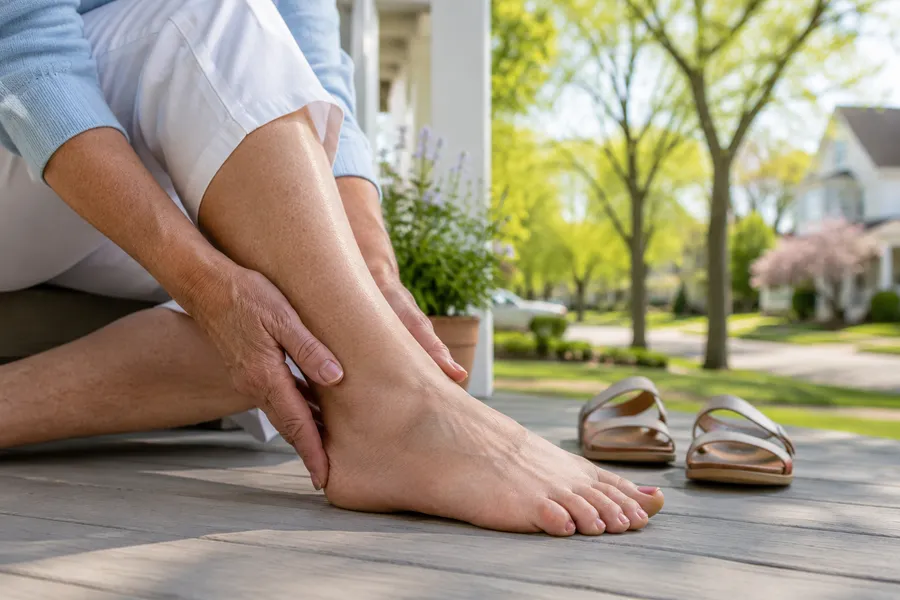
Sandals, flip-flops, and barefoot patios mean more exposed skin and more chances for small scrapes, blisters, and pressure points. Without protective shoes — and without the nerve sensation to register a minor cut — Clifton residents with diabetic neuropathy can develop a wound and miss it for days.
Hidden Wounds from Diabetic Neuropathy
This is the underestimated piece. A pebble inside a sandal, a sock seam pressing against the ankle, a hot pavement burn — any of these can produce a small wound that a person with intact sensation would notice within seconds. With neuropathy, the wound is discovered when it's already infected, or when the sock comes off and there's blood. Combined with poor venous return, that wound is the seed of an ulcer.
Warning Signs to Watch for in Yourself or a Family Member
Vein Center Doctor encourages Clifton patients with diabetes to perform a daily visual leg-and-foot check during warm months, and to act on any of the following:
- A small wound, scrape, or blister that hasn't closed within five to seven days
- Skin discoloration around the ankle that is darker, brownish, or purplish than the surrounding leg
- Persistent swelling that doesn't resolve overnight with elevation
- Skin that feels hardened, leathery, or tight around the ankle
- Itching, burning, or weeping over a small area of skin
- A previous "small spot" that is now larger, deeper, or producing fluid
A family member's outside-eye view is often more useful than your own, particularly if you can't easily see the back of the heel or the inner ankle. Make it part of someone else's routine to check.
How Vein Treatment Reduces Ulcer Risk
Treating chronic venous insufficiency is one of the most effective ways to lower the long-term risk of a venous leg ulcer — and to heal an existing one. The Vein Center Doctor team uses minimally invasive procedures that address the underlying refluxing vein, dropping venous pressure in the lower leg and giving the skin a real chance to recover.
Radiofrequency Ablation (RFA)
A thin catheter delivers controlled heat to the diseased saphenous vein, sealing it shut from the inside. Blood reroutes through healthy deep veins, venous pressure drops, and the ulcer-risk environment improves.
VenaSeal
A medical-grade adhesive closes the refluxing vein without heat or tumescent anesthesia. Patients with diabetes often find the recovery profile especially appealing.
Sclerotherapy
Useful for smaller residual veins that contribute to skin changes around the ankle, sclerotherapy collapses the targeted vessel so blood reroutes to healthier veins.
Compression Therapy
Medical-grade compression stockings remain a foundational treatment for venous ulcer prevention and healing, used alongside the procedures above.
Read more: Chronic Venous Leg Ulcers: Symptoms, Causes, Diagnosis, and Treatment
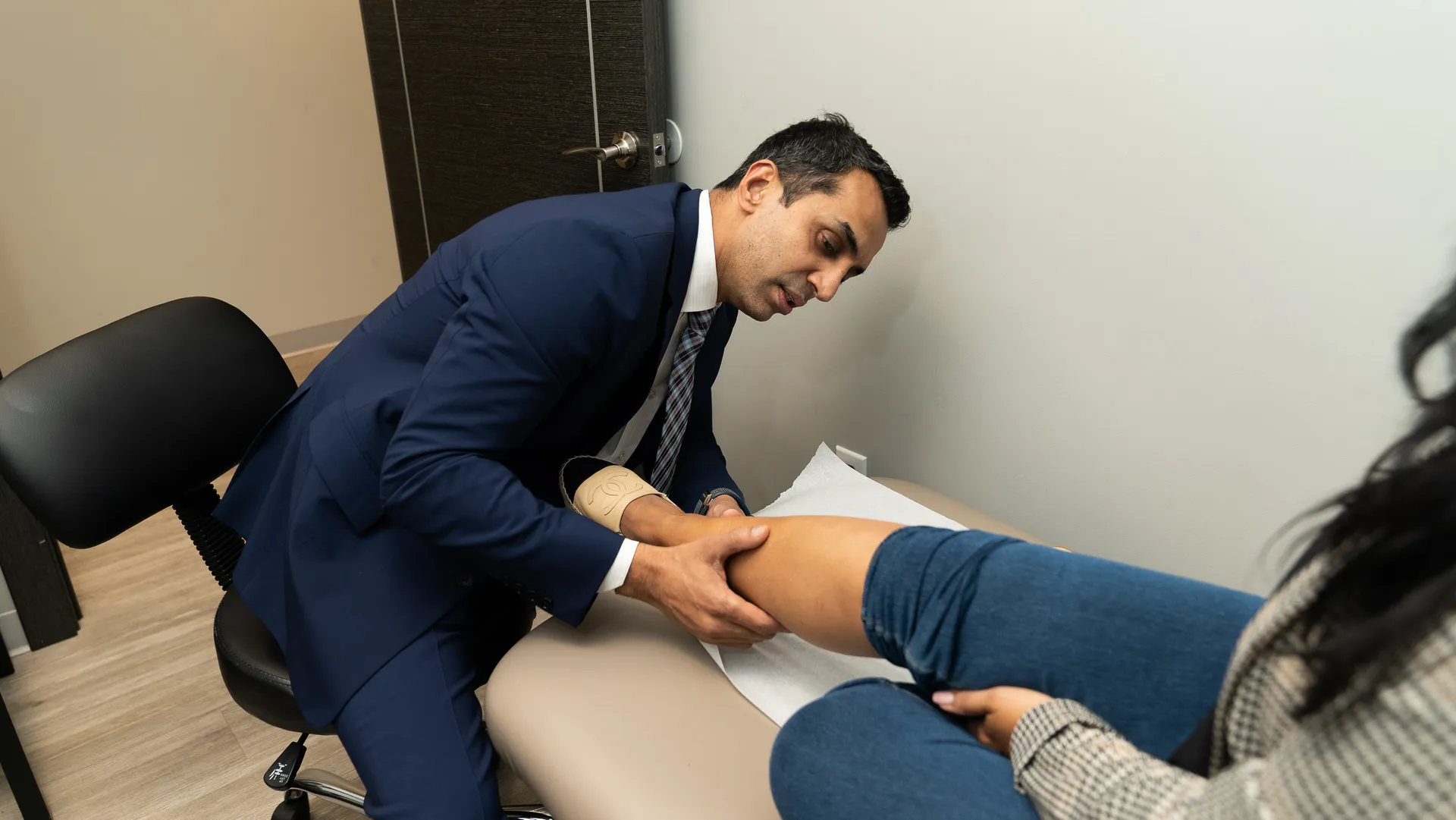
Dr. Rahul Sood's evaluation includes duplex ultrasound to map exactly which veins are contributing to the pressure problem, so the treatment plan is targeted rather than generic.
When to See a Vein Specialist — and When to Go to the ER
There's a clear distinction here, and Clifton residents with diabetes should know both lines.
See a vein specialist when you notice persistent ankle swelling, skin darkening, a small non-healing wound, or any of the warning signs above. A free consultation at Vein Center Doctor in Clifton is the right setting for this conversation.
Go to the ER or call your physician immediately if you have signs of infection (fever, spreading redness, warmth, pus, foul odor, red streaks moving up the leg), if a wound becomes deeper or rapidly larger, or if you develop severe pain, sudden leg swelling, or shortness of breath, which can indicate a blood clot. A diabetic foot wound with signs of infection is an urgent matter, not a wait-and-see one.
Frequently Asked Questions
My diabetes is well-controlled. Am I still at higher risk for a leg ulcer?
Tight glucose control reduces but does not eliminate the risk. The combination of any degree of neuropathy plus chronic venous insufficiency is enough to elevate ulcer risk, particularly during warm months. A free vein evaluation at Vein Center Doctor establishes your baseline.
Will my insurance cover vein treatment if I'm being seen for ulcer prevention?
Insurance often covers vein procedures when there is documented venous disease and qualifying symptoms or skin changes. The Vein Center Doctor team reviews coverage at the consultation and explains what your specific plan covers.
Can I keep wearing sandals in the summer?
You can — but with deliberate care. Inspect feet daily, choose sandals with secure straps rather than loose flip-flops, avoid hot pavement on bare feet, and check the inside for small debris before putting them on. Your podiatrist's footwear guidance and the vein team's circulation guidance should align.
Does losing weight help reduce ulcer risk?
Excess weight increases venous pressure in the legs, so weight loss can reduce some of the underlying load. It does not, however, reverse existing valve damage in the veins themselves — that requires procedural treatment.